Septic System Installation & Repair in Hawaiian Beaches, HI
New septic systems for new builds and rebuilds, and repairs to tanks, baffles, lines and leach fields that have failed in the rock.
Installation & Repair in Hawaiian Beaches
New construction in East Hawaii goes in on a septic system, not a cesspool, and plenty of the systems already in the ground are reaching the age where parts fail. We install and repair septic systems across Hilo, Puna and the Hamakua coast. On the installation side we handle new homes and ohana units, the rebuilds that followed the 2018 eruption in lower Puna, and replacement systems for homes whose old cesspool or field has given out: the site evaluation, the Department of Health permit, the excavation in lava, the tank, the leach field or seepage bed on imported fill, and the inspection. On the repair side we fix what actually breaks: cracked lids and collapsed baffles, sewer lines crushed by rock settlement or invaded by roots, distribution boxes that send everything to one line, failed effluent pumps on lots that lift uphill, and leach fields that have gone wet. We find the real problem before we dig, because excavating lava to fix the wrong thing is an expensive mistake.
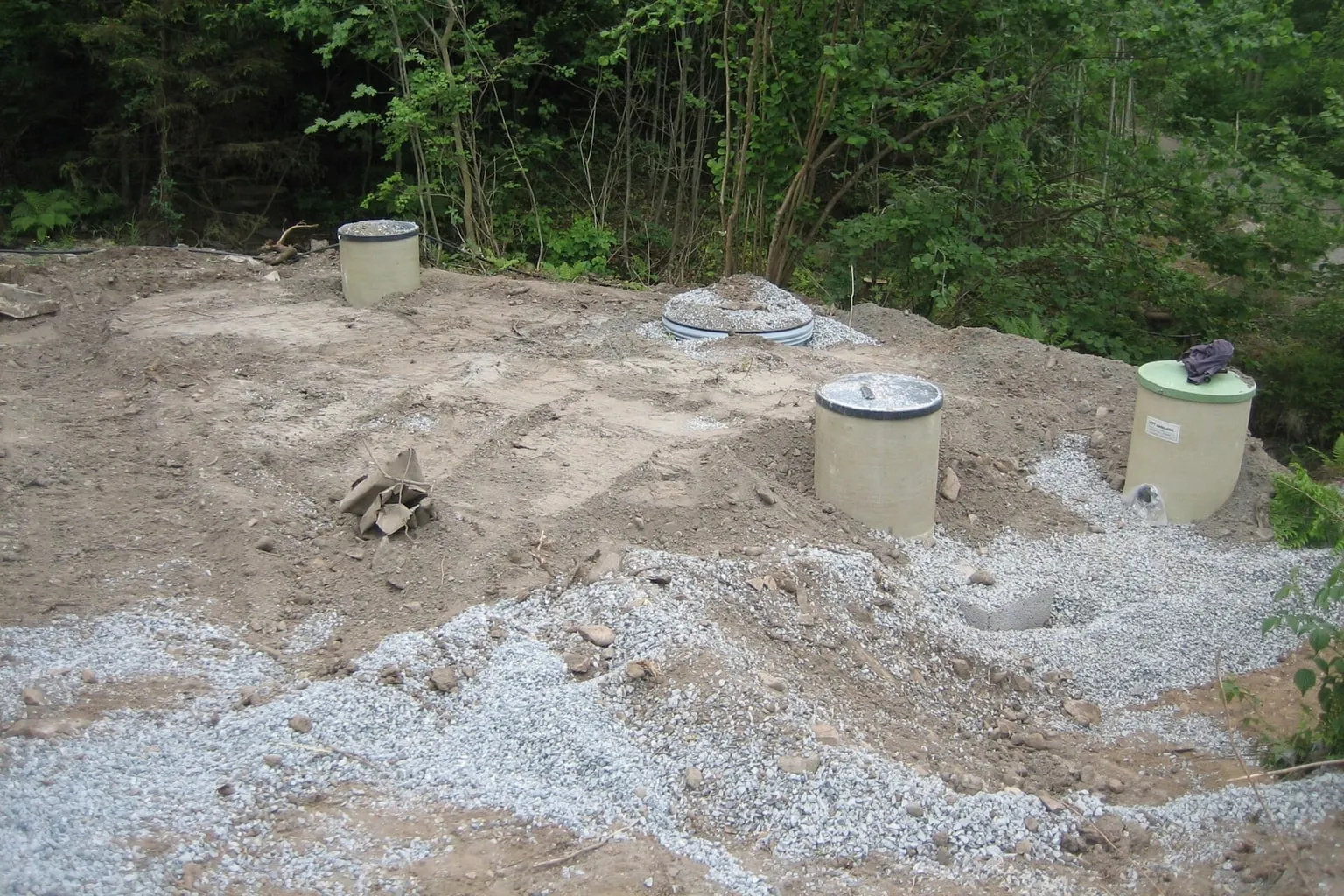
Cesspool and septic service in Hawaiian Beaches
Hawaiian Beaches sits on the Puna coast north of Pahoa, a subdivision of modest lots along Kahakai Boulevard on streets named for fish, with Hawaiian Shores next door and the ocean a short walk makai. It is low, close to sea level, and warm, with trade-wind rain instead of the upland deluges, and it is one of the more affordable neighborhoods in Puna, which means a steady flow of first-time buyers and a lot of long-held family homes. Nearly every house is on catchment, and nearly every house is on a cesspool or a septic system. The lots are smaller than the acre and three-acre subdivisions inland, so the house, the catchment tank, the cesspool and the neighbor’s cesspool all sit close together, and the coastal rock holds groundwater near the surface. That combination makes Hawaiian Beaches the place where a cesspool is most likely to fill from below, and where a conversion has to be designed carefully to fit the setbacks on a small lot, often with an aerobic treatment unit instead of a full leach field. We pump, inspect, convert and repair systems in Hawaiian Beaches and Hawaiian Shores regularly. Tell us the street and what the system is doing and we will quote it straight.
- New septic systems for new builds, rebuilds and ohana units
- Permit, design coordination and Department of Health inspection handled
- Leach fields and seepage beds built on approved fill over lava
- Baffles, lids, risers and distribution boxes replaced
- Cracked, settled and root-filled sewer lines repaired
- Effluent pumps, floats and alarms tested and replaced
Need installation & repair elsewhere? See all of our Hawaiian Beaches services or installation & repair across East Hawaii.
Installation & Repair in Hawaiian Beaches
Tell us what is happening and we will call you back. Local Hawaiian Beaches service.
Areas We Cover in Hawaiian Beaches
In town or at the end of a cinder road: if it’s in or around Hawaiian Beaches, we come to your property.
- Kahakai Boulevard
- The fish-named streets
- Hawaiian Shores
- Makai lots near the coast
- Mauka lots toward Highway 137
Common Cesspool & Septic Issues in Hawaiian Beaches
The cesspool and septic problems we see most around here, and how we handle them.
Cesspools near the water table
This close to sea level a cesspool can sit in groundwater. It fills from the rock, not just from the house, and sludge builds up in a pit that never fully drains. We watch the refill while pumping and tell you honestly how much the pit is doing for you and whether conversion is the real answer.
Small lots and tight setbacks
On a Hawaiian Beaches lot the catchment tank, the house, the pit and the property lines leave little room. Conversions here often mean an aerobic treatment unit, which needs less ground than a conventional field. We lay it out on site and quote the system that fits.
First-time buyers and family homes changing hands
Affordable coastal lots draw first-time owners, and long-held homes are passing to the next generation or to new buyers. Both want to know what the cesspool is doing and what the state deadline means. We inspect for closings and explain it in plain words.
Installation & Repair in Hawaiian Beaches: FAQs
Do you serve Hawaiian Beaches and Hawaiian Shores?
My cesspool is always wet even in dry weather. Why?
Can a cesspool on a small coastal lot be converted at all?
Can a new house in Puna be built on a cesspool?
My leach field is wet and smells. Does it have to be replaced?
My septic alarm is going off. What does that mean?
Also Serving Near Hawaiian Beaches
Installation & Repair in Pahoa, HI
installation & repair and full cesspool and septic service in Pahoa.
View Pahoa →Installation & Repair in Hawaiian Paradise Park, HI
installation & repair and full cesspool and septic service in Hawaiian Paradise Park.
View Hawaiian Paradise Park →Installation & Repair in Keaau, HI
installation & repair and full cesspool and septic service in Keaau.
View Keaau →Need Installation & Repair in Hawaiian Beaches?
Call now for a fast quote. We come to your property, and backups and emergencies get priority.