Septic System Installation & Repair in Hawaiian Acres, HI
New septic systems for new builds and rebuilds, and repairs to tanks, baffles, lines and leach fields that have failed in the rock.
Installation & Repair in Hawaiian Acres
New construction in East Hawaii goes in on a septic system, not a cesspool, and plenty of the systems already in the ground are reaching the age where parts fail. We install and repair septic systems across Hilo, Puna and the Hamakua coast. On the installation side we handle new homes and ohana units, the rebuilds that followed the 2018 eruption in lower Puna, and replacement systems for homes whose old cesspool or field has given out: the site evaluation, the Department of Health permit, the excavation in lava, the tank, the leach field or seepage bed on imported fill, and the inspection. On the repair side we fix what actually breaks: cracked lids and collapsed baffles, sewer lines crushed by rock settlement or invaded by roots, distribution boxes that send everything to one line, failed effluent pumps on lots that lift uphill, and leach fields that have gone wet. We find the real problem before we dig, because excavating lava to fix the wrong thing is an expensive mistake.
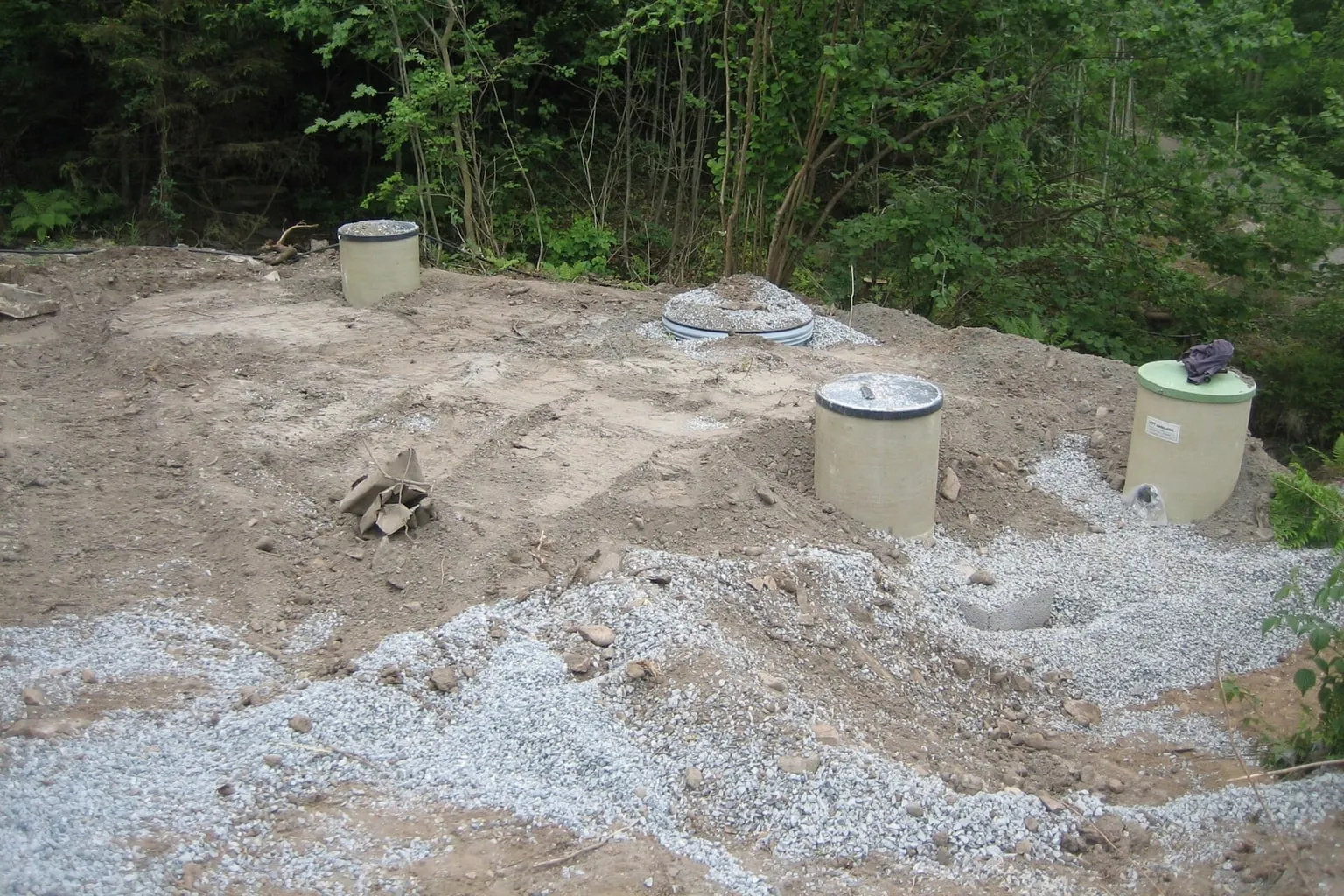
Cesspool and septic service in Hawaiian Acres
Hawaiian Acres is one of the big upland Puna subdivisions, a grid of three-acre lots stretching from Highway 11 near Kurtistown back into the ohia and hapuu fern forest toward Mountain View, laid out on numbered and lettered roads that are mostly unpaved and maintained by the people who live on them. It is high, cool and wet, well over a hundred inches of rain a year, and it has a strong off-grid streak: catchment water everywhere, solar on many roofs, and homes that range from plantation-style houses to cabins at the end of a half-mile cinder driveway. Every one is on a cesspool or a septic system of its own. The ground is young lava under forest floor, and the deeper roads see the most rain and the slowest drainage, so a cesspool back on Road 8 behaves differently from one near the highway. Hawaiian Acres also has a lot of newer owners who bought cheap acreage and are now sorting out what a cesspool is, how the state deadline affects them, and whether the pit behind the house will pass an inspection when they sell. We pump, inspect, convert and repair in Hawaiian Acres regularly, and we know the roads. Tell us the road, how to find the lot, and what the system is doing, and we will come ready and quote it straight.
- New septic systems for new builds, rebuilds and ohana units
- Permit, design coordination and Department of Health inspection handled
- Leach fields and seepage beds built on approved fill over lava
- Baffles, lids, risers and distribution boxes replaced
- Cracked, settled and root-filled sewer lines repaired
- Effluent pumps, floats and alarms tested and replaced
Need installation & repair elsewhere? See all of our Hawaiian Acres services or installation & repair across East Hawaii.
Installation & Repair in Hawaiian Acres
Tell us what is happening and we will call you back. Local Hawaiian Acres service.
Areas We Cover in Hawaiian Acres
In town or at the end of a cinder road: if it’s in or around Hawaiian Acres, we come to your property.
- Lower Hawaiian Acres near Highway 11
- Upper Hawaiian Acres
- The numbered roads
- The lettered roads
- Kurtistown side
Common Cesspool & Septic Issues in Hawaiian Acres
The cesspool and septic problems we see most around here, and how we handle them.
Long cinder driveways and soft roads
A pump truck is heavy, and the back roads of Hawaiian Acres get soft after a week of rain. We ask about the road and the driveway when you call, bring enough hose to park where the ground is solid, and still reach the pit.
Upland rain and slow-draining pits
At this elevation the rain is relentless and the forest floor holds it. Cesspools back in the subdivision refill from the ground and stay wet. Keeping them pumped on a schedule keeps a buffer in the pit; when a pit stops draining altogether, we say so and talk through what comes next.
Cheap acreage, unknown systems
Many Hawaiian Acres lots sold with a house and no paperwork on the cesspool. We locate the pit, pump it, read the walls and the refill, and give the new owner a straight picture of its condition and what the state deadline means for it.
Installation & Repair in Hawaiian Acres: FAQs
Do you really come all the way back into Hawaiian Acres?
My cesspool is near my catchment tank and my neighbor is close. Can I still convert?
How often should an upland Puna cesspool be pumped?
Can a new house in Puna be built on a cesspool?
My leach field is wet and smells. Does it have to be replaced?
My septic alarm is going off. What does that mean?
Also Serving Near Hawaiian Acres
Installation & Repair in Orchidland Estates, HI
installation & repair and full cesspool and septic service in Orchidland Estates.
View Orchidland Estates →Installation & Repair in Kurtistown, HI
installation & repair and full cesspool and septic service in Kurtistown.
View Kurtistown →Installation & Repair in Mountain View, HI
installation & repair and full cesspool and septic service in Mountain View.
View Mountain View →Need Installation & Repair in Hawaiian Acres?
Call now for a fast quote. We come to your property, and backups and emergencies get priority.